 Check 1
Weather
Before you leave the ship
- Look at
- The forecast
- Operator
- May cancel
- You
- Ask how they decide
Guides
Language
EnglishCurrency
US dollar · $GetYourGuide shows prices in the currency you choose.
Guide · Safety
Many people search for a Ketchikan duck tour accident after hearing about duck boat sinkings elsewhere. Here is what happened in 2018, what changed, how the Ketchikan duck runs and how boarding works.
Editorial team, ketchikan-duck-tour.comUpdated October 16, 2026read in 6 minutes9 sources
Quick answer
If you have typed Ketchikan duck tour accident into a search box, you are probably thinking of the duck boat sinking that made national news. That accident happened far from Alaska: the Stretch Duck 7, a modified World War II-era DUKW, sank during a storm on Table Rock Lake near Branson, Missouri.1 Of the 31 people aboard, 17 died.3
It is a sobering record, and it is right to ask about safety before you climb into any amphibious vehicle. The useful questions are concrete ones: what went wrong in that case, what has changed since, how the Ketchikan duck operates and what you can check yourself on the day. This page answers them in that order, using the investigators' own findings and the operator's own terms. Where a question cannot be settled from those sources, it says so and tells you whom to ask, because a safety answer is only useful if it is true for the vehicle you are about to board.
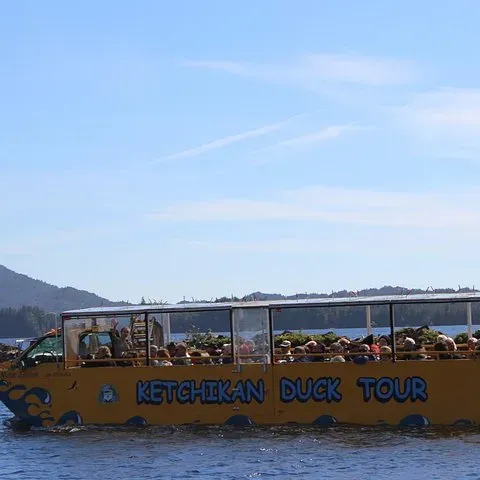
One thing helps from the start: the Ketchikan duck runs a short harbor route, not a lake crossing in open country. The operator keeps the water section in the calm, protected waters of the Inside Passage and does not go into the open ocean. That does not make any vehicle risk-free, but it is a very different setting from the one in the Missouri accident.
From accident to rules
2018
The Stretch Duck 7 sank in a storm on Table Rock Lake.1
Toll
Of 31 people aboard, 17 died.3
Findings
Tours went on after a severe thunderstorm warning.4
Findings
Rules did not require enough reserve buoyancy.5
Rules
DUKW vessels must carry at least 4 of them.6
Rules
A DUKW is checked in the water before each departure.7
The National Transportation Safety Board investigated the sinking in detail. It found the probable cause in the operator's continued operation of waterborne tours after a severe thunderstorm warning was issued for the lake.4 In plain words, the vessel went out on the water when the weather warning said it should not have.
The board also named a contributing factor in the rules themselves: the Coast Guard's failure to require sufficient reserve buoyancy in amphibious vessels.5 Reserve buoyancy is what keeps a vessel afloat when water gets in, so this finding goes to the design of the vehicles, not only to one bad decision on one evening.
A third finding concerned escape. The board said the Coast Guard's action on emergency egress was ineffective on amphibious passenger vessels with fixed canopies, and that this contributed to the loss of life.8 A fixed roof can trap people inside a sinking vehicle, which is why canopies and side curtains became a focus of the rules that followed.
Two settings
| Point | Missouri, 2018 | Ketchikan duck |
|---|---|---|
| Waters | Table Rock Lake | Protected Inside Passage |
| Vehicle | Modified WWII DUKW | Coast Guard inspected amphibian |
| Weather | Toured after a storm warning | Operator may cancel |
| Ride | Lake portion of a tour | About 1.5 hours, town and harbor |
Missouri details from the NTSB investigation; Ketchikan details from the operator and its listing.142
Three checks
Check 1Before you leave the ship
 Check 2
 Check 3
Decision helper
Answer for the person most affected
The water part stays in protected waters, seated throughout.
Boarding is by a ladder; mobility aids stay below.
The aid waits in a dry, secure area during the tour.
Children 3 to 12 ride on a child fare.
The operator can cancel for weather and then refunds or rebooks.
Contributing to the sinking was the Coast Guard’s failure to require sufficient reserve buoyancy in amphibious vessels.
After the accident, federal regulations set specific requirements for DUKW amphibious passenger vessels, the World War II-era type that the Missouri vehicle was built from. Among them, a DUKW must carry not fewer than 4 independently powered bilge alarms.6 Those alarms warn the crew early if water is getting into the hull.
The rules also require the watertight integrity of a DUKW to be verified through an in-water inspection at the start of each waterborne departure.7 Put simply, before every trip into the water the crew has to check that the hull is sealed. It is a routine check, but it targets exactly the kind of flooding that sank the Stretch Duck 7.
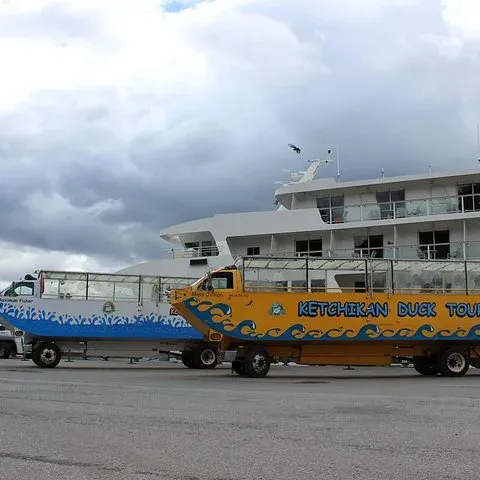
These particular rules apply to DUKW-type vessels. The Ketchikan operator describes its own duck as a Coast Guard certified and inspected amphibian that doubles as a boat and a bus.2 If the build of the vehicle matters to you, ask the operator at check-in what kind of amphibian it is and how it is inspected; a reputable crew will be glad to explain.
Checklist
Video
Nothing loads until you tap play.
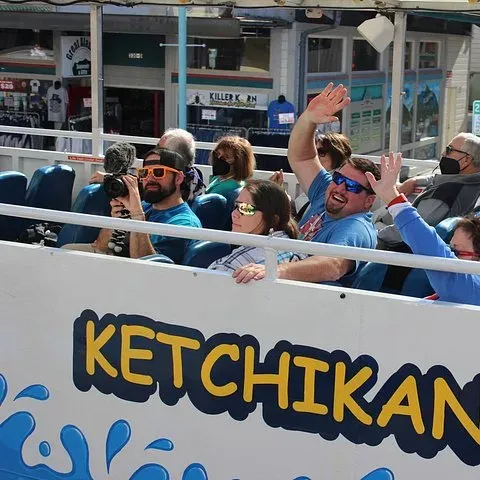
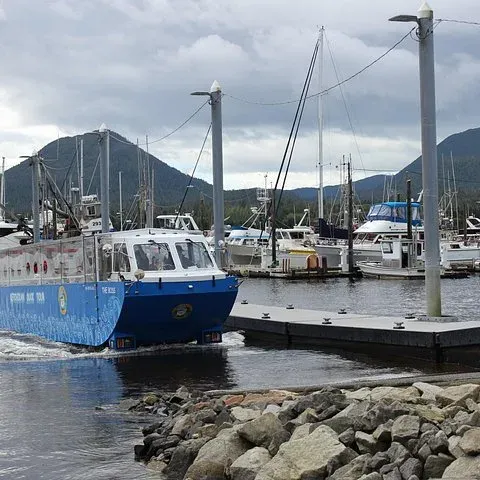
The Ketchikan ride is short and close to town. It lasts about 1.5 hours in total, part of it on the streets and part in the harbor. On the water, the duck runs along the Tongass Narrows past canneries, seaplane docks and the waterfront.9 The channel is a busy, sheltered working harbor rather than open water.
Weather decisions sit with the operator. It can cancel a departure for bad weather or because too few passengers have booked, and in that case it offers an alternative or a full refund. That matters for safety as well as for your plans: a cancelled tour on a stormy day is the system working, not failing.
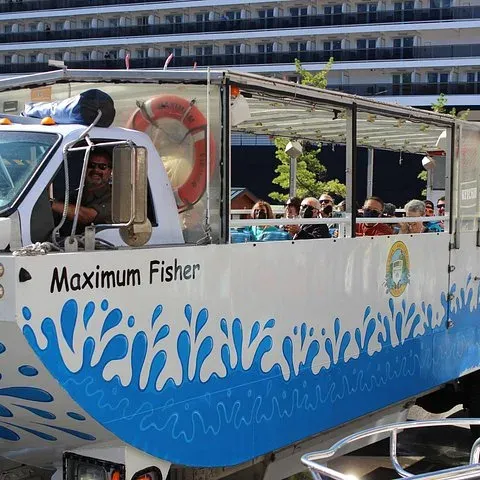
Inside the duck, the rules are simple. Guests are seated for the entire tour, alcohol and smoking are not allowed on board and the guide talks you through the ride. Listen to the short briefing before the water section, and ask about the location of life jackets if it is not mentioned. Knowing where they are takes a moment and costs nothing.
Boarding is by a ladder. Guests climb 9 steps, each about 6 inches high, to get into the duck, and they stay seated for the whole ride. The operator rates the tour as suitable for all physical fitness levels, but the ladder is the one point everyone in your group must be able to manage on their own or with light help.
Wheelchairs, walkers and strollers do not come on board. They are taken at the bottom of the boarding ladder, kept in a dry, secure area during the tour and returned at the end. For a guest who can climb the steps but walks with an aid, this works well; for a guest who cannot climb at all, the duck is not the right vehicle.
Service animals are allowed. There is no restroom on board, so plan a stop before you check in; restrooms are on the cruise pier and in the visitors bureau. If anyone in your party has specific needs, contact the operator before you book, because tickets are non-refundable once bought.
A few minutes of attention make any boat trip safer. Look at the sky and the forecast on the morning of your tour. If a storm warning is out and the duck still plans to go on the water, it is reasonable to ask the crew how they decide. In the Missouri case, the decisive mistake was going out after a severe thunderstorm warning.4
Once aboard, note the exits and how the roof and sides are built. Fixed canopies were a factor in the loss of life in Missouri, so it is sensible to know how you would get out if you had to.8 Keep bags small and out of the aisle, and keep children seated beside you rather than across the vehicle.
Above all, keep perspective. The duck tour listing alone carries 2,977 ratings, so a great many guests have taken this ride. Being informed is not the same as being afraid. Ask your questions, listen to the briefing and then enjoy the splash into the harbor like everyone else on board.
Ready to splash
Pick a departure that fits your port day, then meet the duck at the pier.
The well-known sinking was in Missouri. The Stretch Duck 7 sank on Table Rock Lake near Branson, Missouri.1
Going out after a storm warning. The NTSB named the continued waterborne tours after a severe thunderstorm warning as the probable cause.4
Yes, says the operator. It describes the duck as a Coast Guard certified and inspected amphibian.2
No. The water part stays in the calm, protected waters of the Inside Passage.
The operator may cancel. If it cancels for weather, it offers an alternative or a full refund.
Only if they can climb the ladder. Wheelchairs stay in a dry, secure area at the bottom during the tour.
Children ride seated beside an adult. Child fares cover ages 3 to 12; keep them seated next to you.
Sources
Keep reading