 On the pier
Guides
Language
EnglishCurrency
US dollar · $GetYourGuide shows prices in the currency you choose.
Guide · Photos
Ketchikan duck tour photos: what to shoot and when
The splash, Creek Street on its stilts, floatplanes and fishing boats: where the good Ketchikan duck tour photos come from, how to shoot from a moving seat and how the weather changes the picture.
Check availabilityfrom $79
Editorial team, ketchikan-duck-tour.comUpdated October 16, 2026read in 6 minutes12 sources
Quick answer
Where the good Ketchikan duck tour photos come from
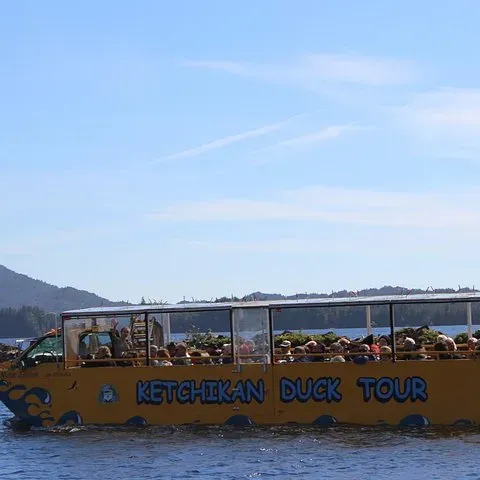
Most Ketchikan duck tour photos fall into three groups: the duck itself, the town seen from a slow vehicle, and the harbor seen from the water. The ride gives you all three in about 1.5 hours. You stay seated the whole way, so there is no hopping off for a perfect angle; instead you learn to shoot quickly, while the duck rolls or drifts past.
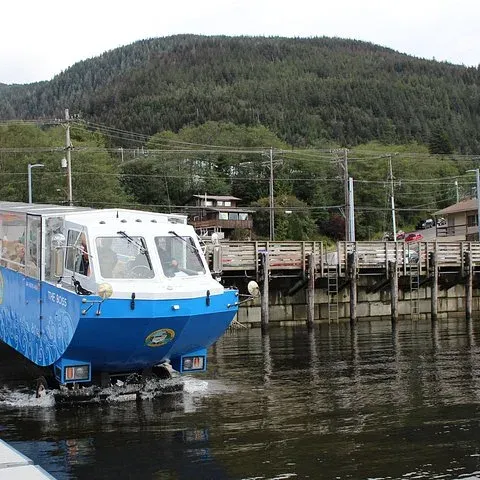
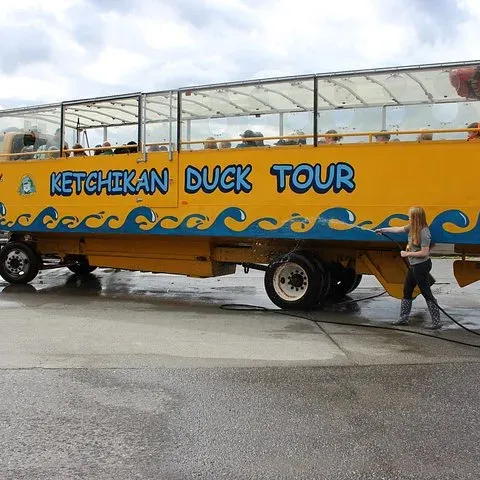
The duck is the easiest subject of all. Before you board, it stands on the pier next to the cruise ships, bright and boxy, with a ladder up its side. A wide shot from the dock with your ship behind it tells the whole story of the day in one frame. Take it before you check in, while there is still time to step back.
On board, think in moments rather than places. The operator's route moves from the salmon ladder through City Park, past Whale Park and along Creek Street, then splashes into the harbor.21 Each of those gives you a few seconds of a clear view, so have the camera ready before the guide announces the next stop.
The splash, the shot everyone wants
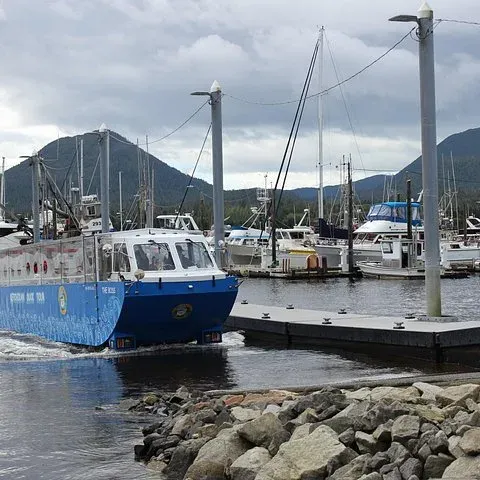
The single most photographed moment is the entry into the water. The duck drives down and splashes into the harbor on the Tongass Narrows.1 From inside, the best picture is usually not the water itself but your fellow passengers' faces as the front dips and the spray comes up. Turn your phone around or point it along the aisle.
Video beats stills here. A short clip of the approach, the splash and the first seconds afloat captures what a single photo cannot: the change from road to water. Start recording a few seconds before the guide's countdown, hold the phone steady with both hands and keep filming until the duck has settled into the water.
If you prefer a view of the duck splashing from outside, that has to happen before or after your own ride. Other departures enter the water through the day, and the waterfront near the pier is where you can watch them. It makes a fun shot to take while you wait for your own departure time.
Light and rain
Daylight and rain in Ketchikan through the year
Hours without sunDays with precipitationSeason
Shot list
The photos to aim for, in order
| Shot | Where | Tip |
|---|---|---|
| The duck by your ship | Cruise pier | Take it before check-in |
| Salmon ladder | Ketchikan Creek | Best in the late-summer run |
| Totem in the park | Whale Park | A quick vertical frame |
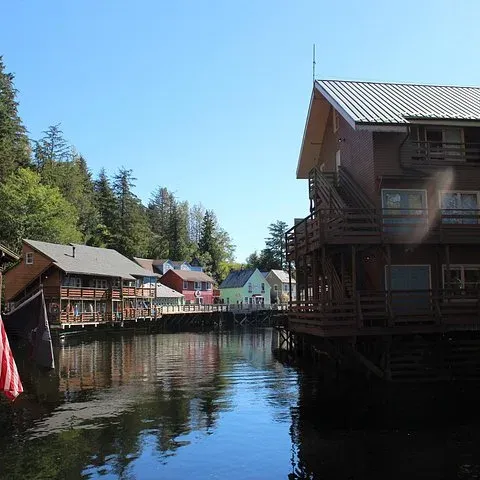
| Boardwalk on stilts | Creek Street | Shoot through the gaps |
| The splash | Tongass Narrows | Use video, not stills |
| Floatplanes | Seaplane docks | Keep the camera up |
Places as the operator describes the route; salmon timing from the Ketchikan Visitors Bureau.2135
Three shots
The duck, the town, the water
On the pier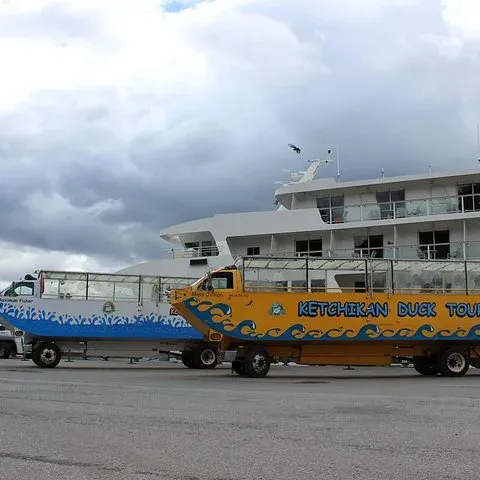 On land
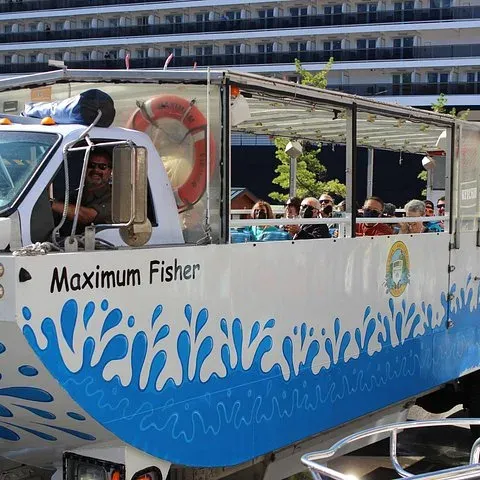 Afloat
Decision helper
Which photo plan suits you?
Pick the plan for the pictures you want
Film the splash
Start recording before the duck enters the water.
Walk back to Creek Street
The boardwalk is the best-known view in town.6
Stay ready afloat
The duck passes seaplane docks and canneries.3
Visit in late summer
That is when runs typically come.5
Aim for May or June
Each has 11 wet days on average.4
The planks of Ketchikan’s famous Creek Street are a good spot to watch salmon swim upstream.
Town photos from a moving seat
On land, the duck moves slowly enough to shoot, but not slowly enough to compose carefully. Creek Street is the best town subject: the boardwalk and stilted buildings over the creek are the most recognizable view in Ketchikan.6 Dolly's House, the former home of Dolly Arthur and now a museum, adds a splash of color on the street.8
Whale Park, with its flowers and totem, gives you a quick vertical shot of a pole against the trees.2 At the salmon ladder, the creek and falls make a good scene even outside the run. In season, salmon are the prize; runs here are seasonal and typically come in late summer, so leaping fish are a matter of timing.5
Seated photography has a simple rule: shoot through the gap, not through the frame. Wait until a pole or window edge clears your view, then take a burst of several frames. One of them will be sharp and clean. Afterwards, walk back to Creek Street to take the careful, framed pictures that a moving seat cannot give you.
Map
The duck's Ketchikan, from pier to creek
The downtown berths, the town stops on the operator's route and the water the duck drives into.
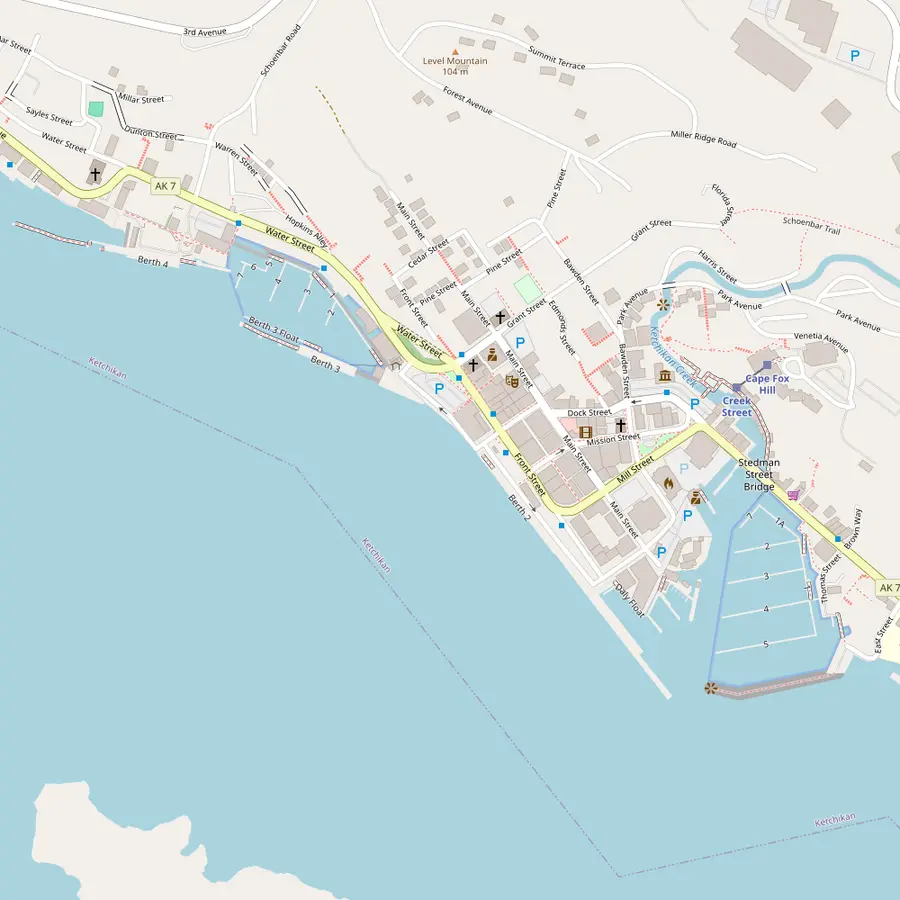 1Berth 12Visitors Center, Berth 23Berth 44Whale Park5Creek Street6Dolly's House7Salmon ladder8Thomas Basin9Tongass Narrows
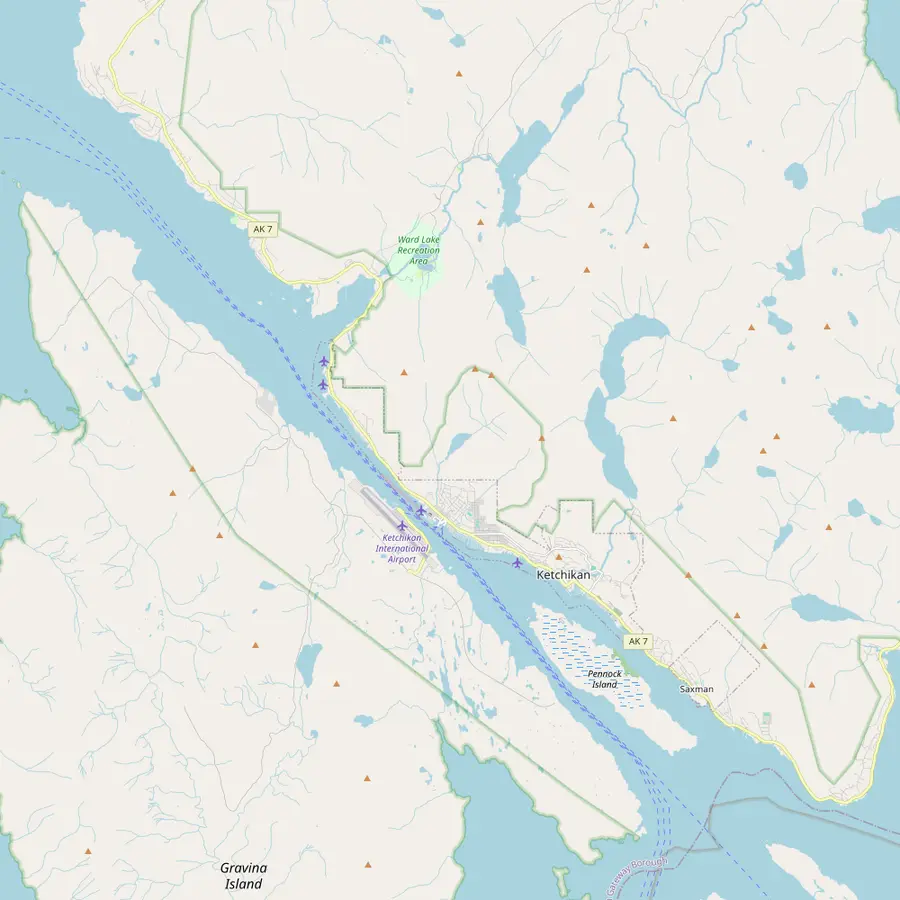 10Downtown berths 1 to 411Ward Cove
- 1Berth 1
One of four Panamax-sized cruise berths along the downtown waterfront.9
- 2Visitors Center, Berth 2
Free maps, restrooms and a tour center that sells tickets on the day.1011
In Google Maps ↗ - 3Berth 4
The north end of the downtown berths; duck tours leave from berths 1 to 4.
- 4Whale Park
A small park with a totem that the duck passes on its land route.2
In Google Maps ↗ - 5Creek Street
The boardwalk on stilts over Ketchikan Creek, once the red-light district.6
In Google Maps ↗ - 6Dolly's House
Dolly Arthur's Creek Street house, now a museum.8
- 7Salmon ladder
Where salmon climb Ketchikan Creek in season; the duck drives past it.2
In Google Maps ↗ - 8Thomas Basin
A small-boat harbor on the south side of downtown, full of fishing boats.
- 9Tongass Narrows
The channel the duck splashes into for the harbor part of the tour.1
- 10Downtown berths 1 to 4
Where every duck tour starts; check in at the bottom of your ship's ramp.
- 11Ward Cove
The second cruise dock, about 5.5 miles from downtown.12
In Google Maps ↗
Checklist
Camera kit for the duck
01
Bring
- Phone or compact camera with a wrist strap
- A small cloth for rain on the lens
- A charged battery
02
Set up before boarding
- Burst mode for the town
- Video ready for the splash
- A clean lens
Video
A ride on the Ketchikan duck, land and water
Nothing loads until you tap play.
Harbor photos afloat
Once afloat, the duck slows down and the views open up. It runs along the channel with close views of fishing canneries, seaplane docks, seasonal wildlife and the waterfront.3 This is the calmest part of the ride for photos, because the water section stays in the protected waters of the Inside Passage rather than the open ocean.
Floatplanes are the classic Ketchikan subject. Watch the seaplane docks and keep the camera up when you hear an engine; a takeoff happens fast and does not repeat. Fishing boats in the harbor make easier, slower subjects, with their masts, nets and reflections. In grey light, close details such as ropes, buoys and painted hulls often look better than wide scenes.
Turn back toward town at least once while you are on the water. Downtown Ketchikan sits along the waterfront of the Tongass Narrows, with the mountains rising behind it.10 That view of the town from the water, with a cruise ship or two at the berths, is the one picture you cannot take from the land.
Light and rain: what the weather does to photos
Ketchikan's climate shapes every picture you take, and it pays to plan for it. Summer days are long: in mid-June the sun is above the horizon for 17.4 hours, and in mid-July for 16.9 hours.4 That gives you light for photos from the earliest departure to the last one, so you can choose your time by the weather rather than the clock.
Rain is part of the deal. In an average August, 13 days see 2.5 mm of rain or more, and in September 18 do.4 Grey skies are not a disaster for photos: they soften harsh shadows, saturate the colors of painted buildings and make the forest look deep green. What matters more is keeping water off the lens.
May and June are the driest months of the duck's season, with 11 wet days each on average.4 If photos are high on your list and your cruise falls then, you have the best odds of a clear view of the mountains across the Narrows. Later in the season, plan for wetter weather and rely more on close-up shots.
Camera tips for the duck
Keep your kit small. A phone or a compact camera is all you need, and both are easier to manage in a seat than a large lens. Wear a wrist strap; dropping a phone over the side of a boat is a story nobody wants to tell. A small cloth in a pocket lets you wipe rain or spray from the lens before the moments that matter.
Check your settings before you board. Turn on burst mode for the town section, switch to video for the splash and back to photos for the harbor. Clean the lens on the pier rather than on board, and make sure your phone has battery left after a morning of ship photos. A charged phone is the most important accessory of the day.
Finally, share the view. Passengers on both sides of the duck want the same pictures, so take your shot and lean back. The ride is short, and you will remember it better if you spend part of it simply looking. The photos on this page and the video below give you an idea of what to expect before you go.
Ready to splash
Book your seat on the duck
Pick a departure that fits your port day, then meet the duck at the pier.


You ask,we answer.
What are the best Ketchikan duck tour photos?
The splash and the harbor. The duck drives into the harbor on the Tongass Narrows, then passes canneries and seaplane docks.13
Can I get off to take pictures?
No. Guests stay seated for the whole tour; walk back to your favorite spots afterwards.
Is there a Ketchikan duck tour video?
Yes, below. The video on this page shows a ride on the duck, on land and on the water.
Which months have the best light?
Early summer. The sun is up for 17.4 hours in mid-June.4
Will rain spoil the photos?
Not if you plan for it. Grey light suits close-ups; keep a cloth to dry the lens.
Can I photograph salmon from the duck?
Sometimes, in season. Runs are seasonal and typically come in late summer.5
Where can I take Creek Street photos on foot?
On the boardwalk itself. Its planks are also a good spot to watch salmon in season.7
Sources
What this text is based on
- 1Ketchikan Duck Tour (Alaska Amphibious Tours)Ketchikan Duck Tour↩
- 2Ketchikan Duck Tour (Alaska Amphibious Tours)Ketchikan Duck Tour↩
- 3Ketchikan Duck Tour (Alaska Amphibious Tours)Ketchikan Duck Tour↩
- 4↩
- 5Ketchikan Visitors BureauCreek Street↩
- 6Ketchikan Visitors BureauCreek Street↩
- 7Alaska Department of Fish and GameKetchikan Wildlife Viewing: Downtown Ketchikan↩
- 8Alaska's News Source (KTUU)Roadtrippin: The colorful history of Creek Street↩
- 9City of KetchikanPort of Ketchikan↩
- 10Ketchikan Visitors BureauDowntown Ketchikan↩
- 11Ketchikan Visitors BureauWelcome Cruise Travelers↩
- 12Ketchikan Visitors BureauWelcome Cruise Travelers↩